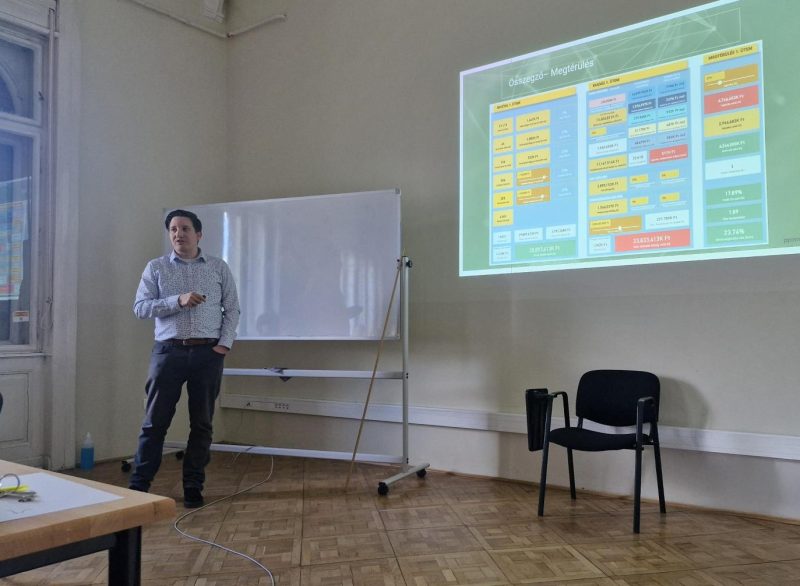
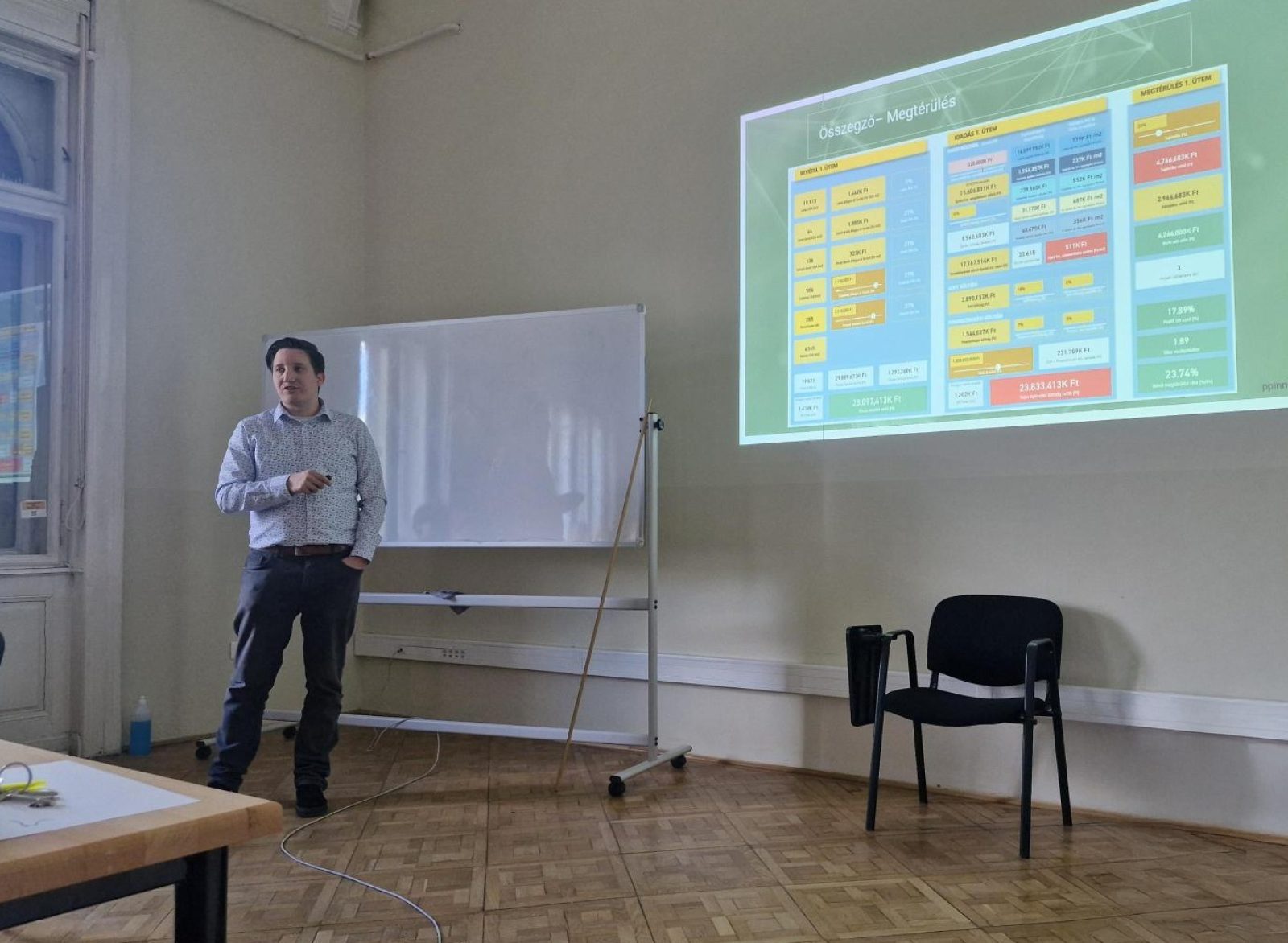
On April 9, Béla Szivák, CEO of Paulinyi & Partners Innovations, and Miklós Balaskó, BIM Development Director, delivered a lecture at the Ybl Miklós Faculty of Architecture and Civil Engineering at Óbuda University. During the session, they introduced the operation and practical applications of the Energy Quick Scan (EQS) and EasyInvest systems to students.
The lecture aimed to integrate data-driven decision support and sustainable building development approaches directly into the education of future architects. Fortunately, this was neither the first, nor the last occasion to contribute to this mission during the semester.
Data-driven tools supporting design and investment decisions
EasyInvest is an investment optimisation platform that integrates financial and sustainability considerations into a single, comprehensive analytical framework. It supports developers in evaluating financial outcomes, helps operators assess energy consumption profiles and risks, and enables municipalities to forecast livability and wellbeing indicators.
Energy Quick Scan (EQS) is a digital decision-support service capable of running hundreds of energy scenarios for existing buildings within a short timeframe – typically as little as three weeks. The system enables the forecasting of the impact of energy efficiency interventions, supporting decision-making for real estate developers, operators, and municipalities in addressing the challenges of the energy transition.
The lecture provided students with direct insight into how such data-driven solutions can be applied in design and development processes – not only from the perspective of energy compliance, but also in terms of long-term asset value and the full lifecycle performance of buildings.
A shared path for innovation and education
According to our philosophy, it is essential that professional innovation and higher education remain closely interconnected. The collaboration with Óbuda University is a tangible expression of this approach, enabling students to gain first-hand experience with the digital tools and methodologies that are set to shape design and development practices in the decades to come.
The lecture's message resonates strongly with the current industry context: in the wake of the European energy crisis, building energy efficiency is no longer merely a sustainability ambition – it has become an economic imperative.
Throughout the remainder of the semester, our experts will continue to contribute to the programme at the Ybl Miklós Faculty: on April 23, Orsolya Vass will deliver a lecture on sustainable interior design, and on May 8, Miklós Balaskó will present the EasyInvest system at the Ybl Conference.