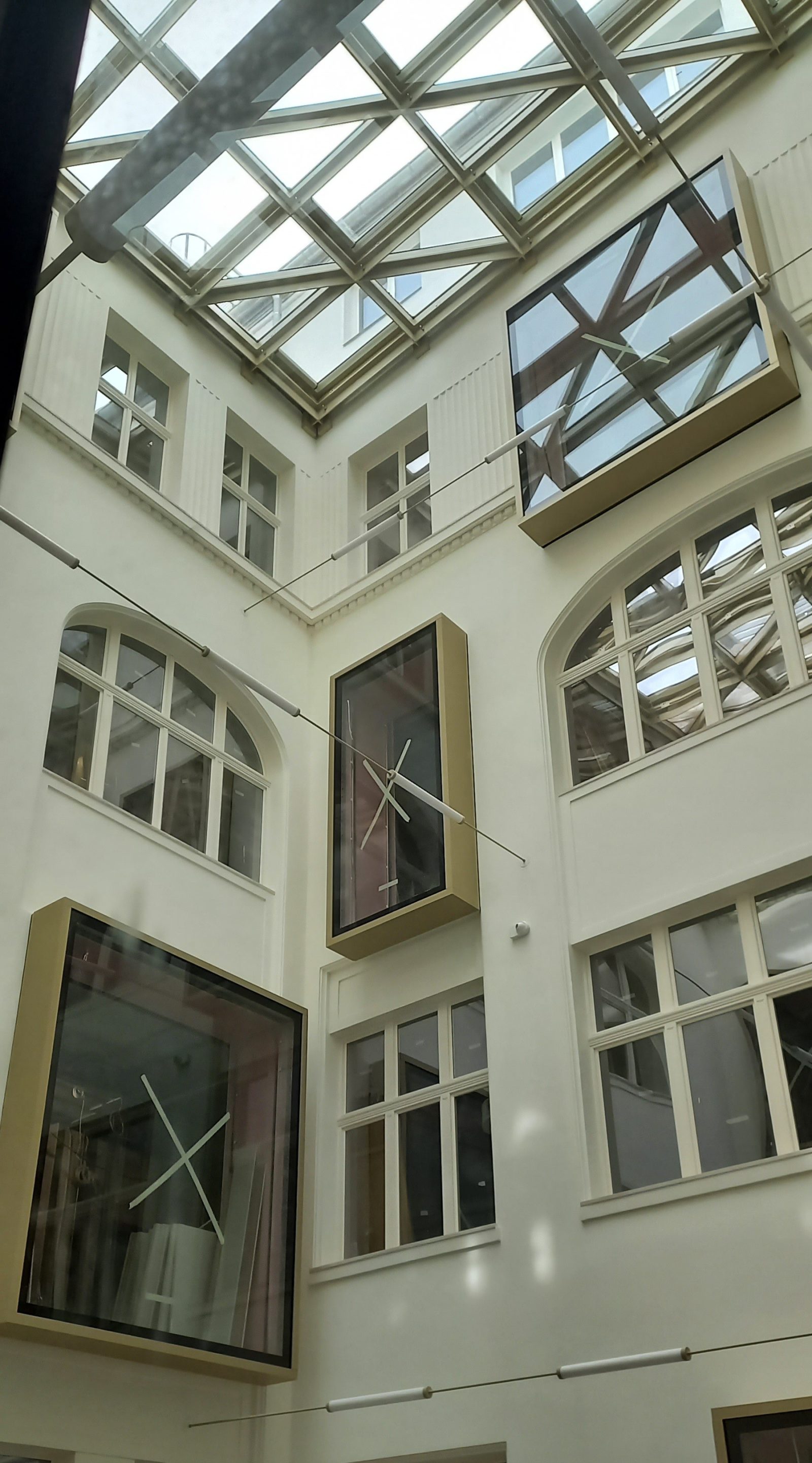
Preserving the built heritage is not merely an obligation, but a responsibility towards the future. Behind every design decision in the renovation of Nádor Street 21 lies a fundamental question: what do we give back to the city, and what do we carry forward from the past hundred years into the next? On World Heritage Day, we present what the active protection of heritage means to us – through a project that is anything but ordinary.
A remarkable heritage at the heart of Budapest
Standing at the corner of Arany János Street and Nádor Street, the building was constructed between 1912 and 1915 to designs by architects Sámuel Révész and József Kollár. It carries not only the delicate richness of Art Nouveau detailing, but also a distinctive chapter of Hungarian industrial history. The former Ugriai–Nasici Wood Bank office building preserves the spirit of Slavonian forests in its intricately carved oak panelling, acorn-and-oak-leaf ornamentation, and sculpted facade – in every corner where Károly Bodon's designs bring the world of the forest to life for the visitor.
The philosophy of renovation: the active protection of heritage
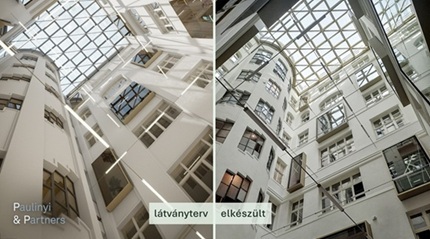
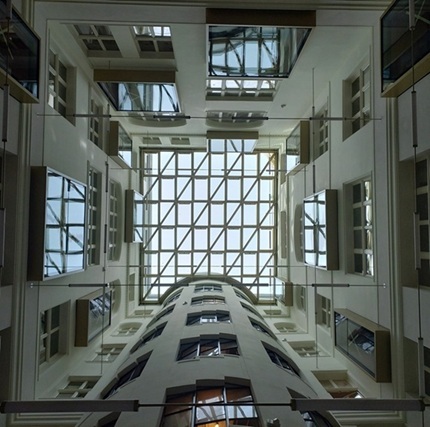
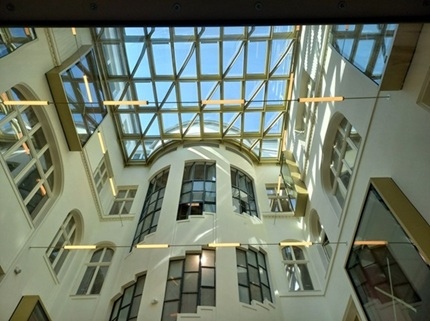
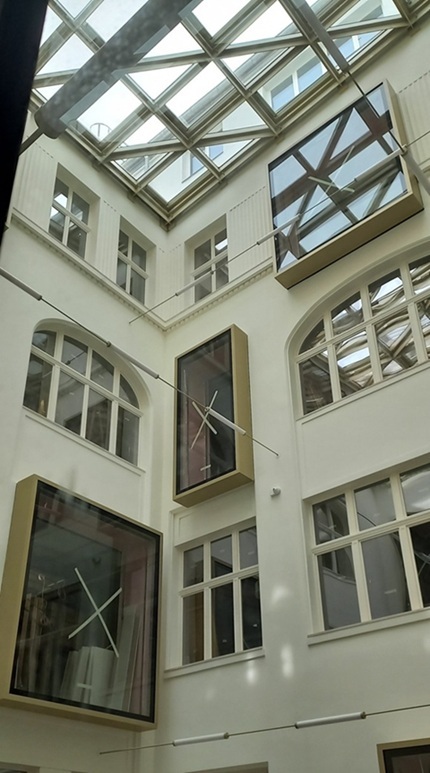
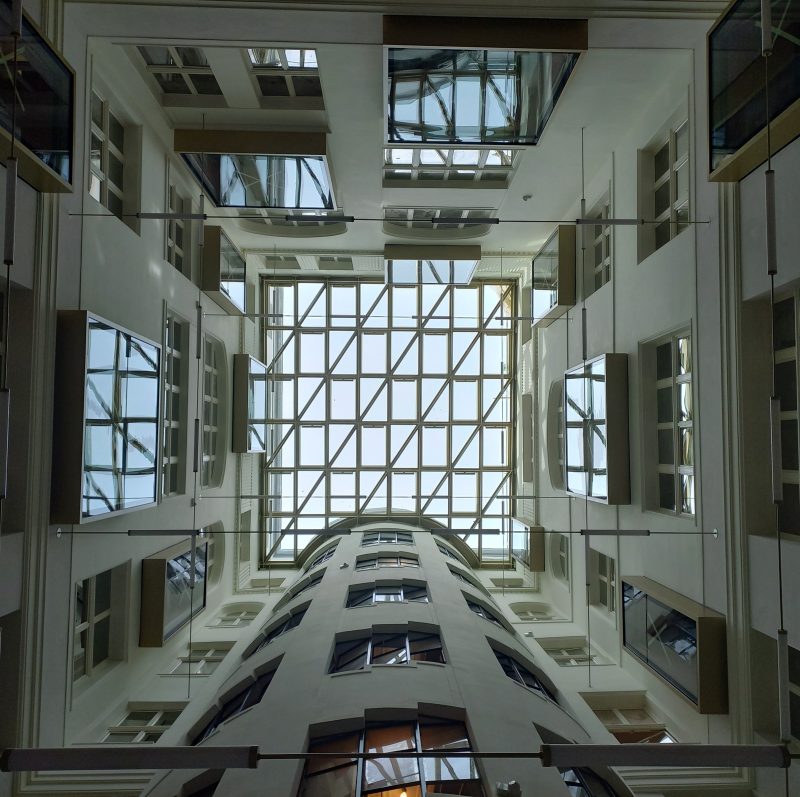
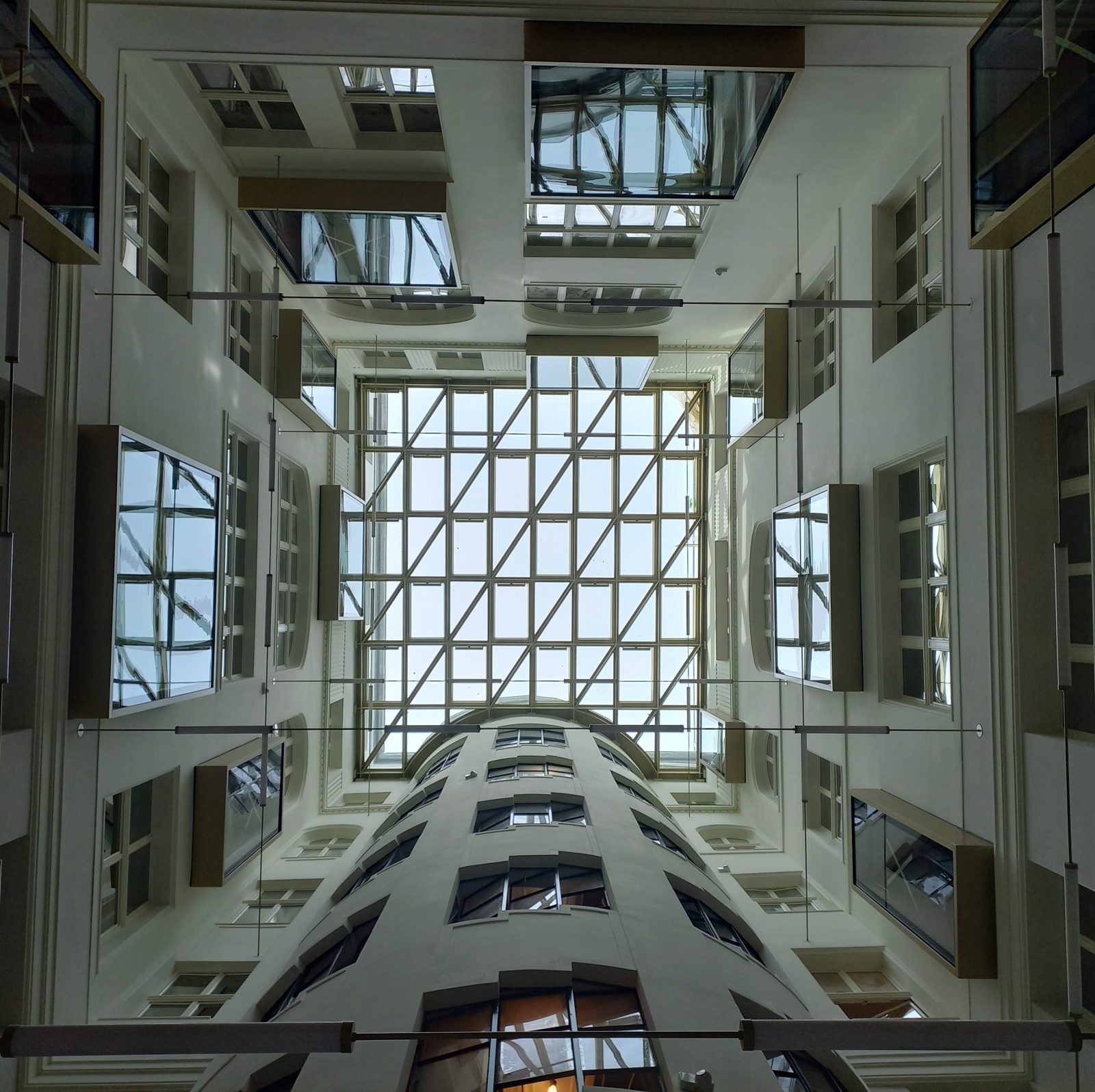
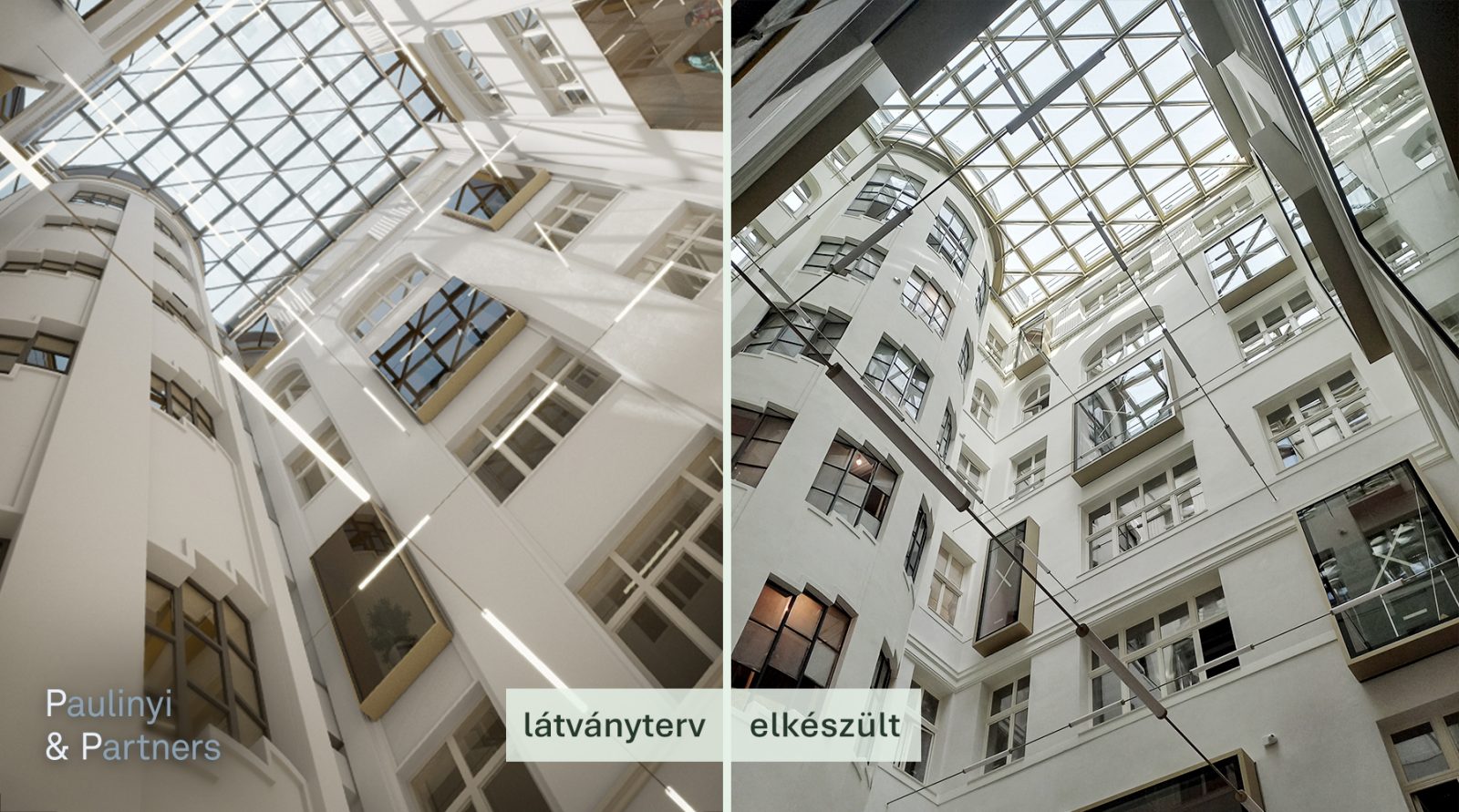
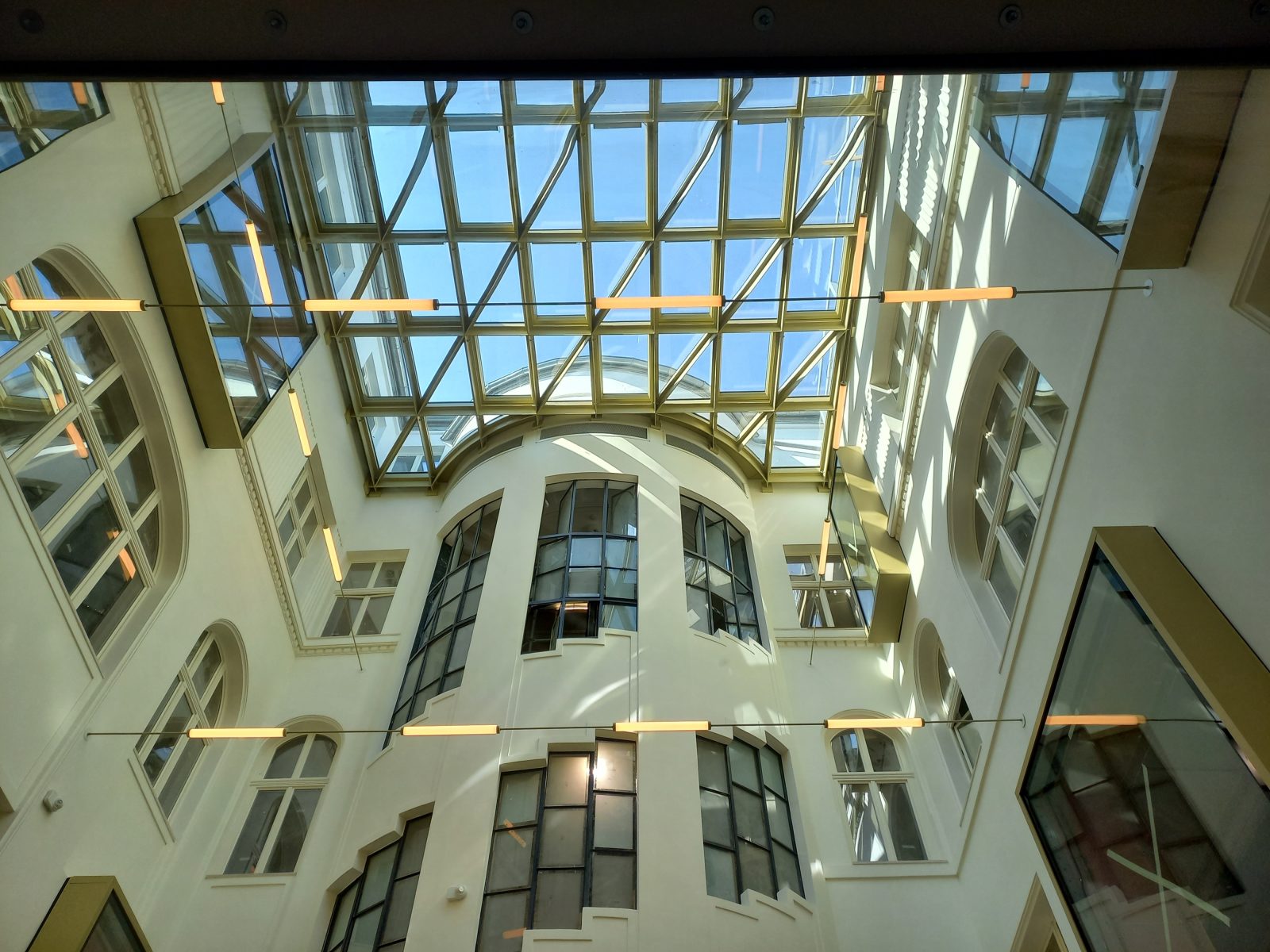
For our architects, the renovation of Nádor Street 21 is far more than a reconstruction – it is the opening of the next chapter in the history of the Wood Bank. Throughout the work on this century-old listed building, preserving the building's historic values was the primary consideration at every stage of intervention: from the restoration of the Sóskút limestone facade and the re-carving of its ornamental details, to the "invisible modernisation" of the windows that retained their original appearance; from the glass roof evoking the iconic "N" motif of the former Wood Bank, to the transformation of the previously open courtyard into a light-filled communal space.
Why does this matter on World Heritage Day?
Heritage protection cannot be reduced to conservation alone. Projects such as the renewal of Nádor Street 21 demonstrate that historic buildings are fully capable of meeting the demands of the 21st century – when approached by designers with the right combination of humility and engineering precision. Contemporary thermal solutions, intelligent spatial design, and sustainable operation are not pursued in opposition to heritage, but in harmony with it.
We firmly believe that preserving and enhancing Budapest's rich architectural heritage is both a professional and a social responsibility. In the case of Nádor Street 21, we are proud that our colleagues are not closing the book on the building's century-long story – but continuing to write it.