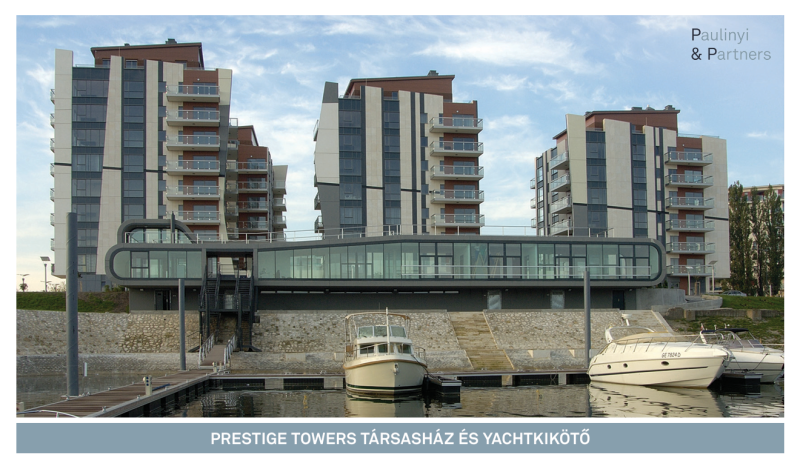
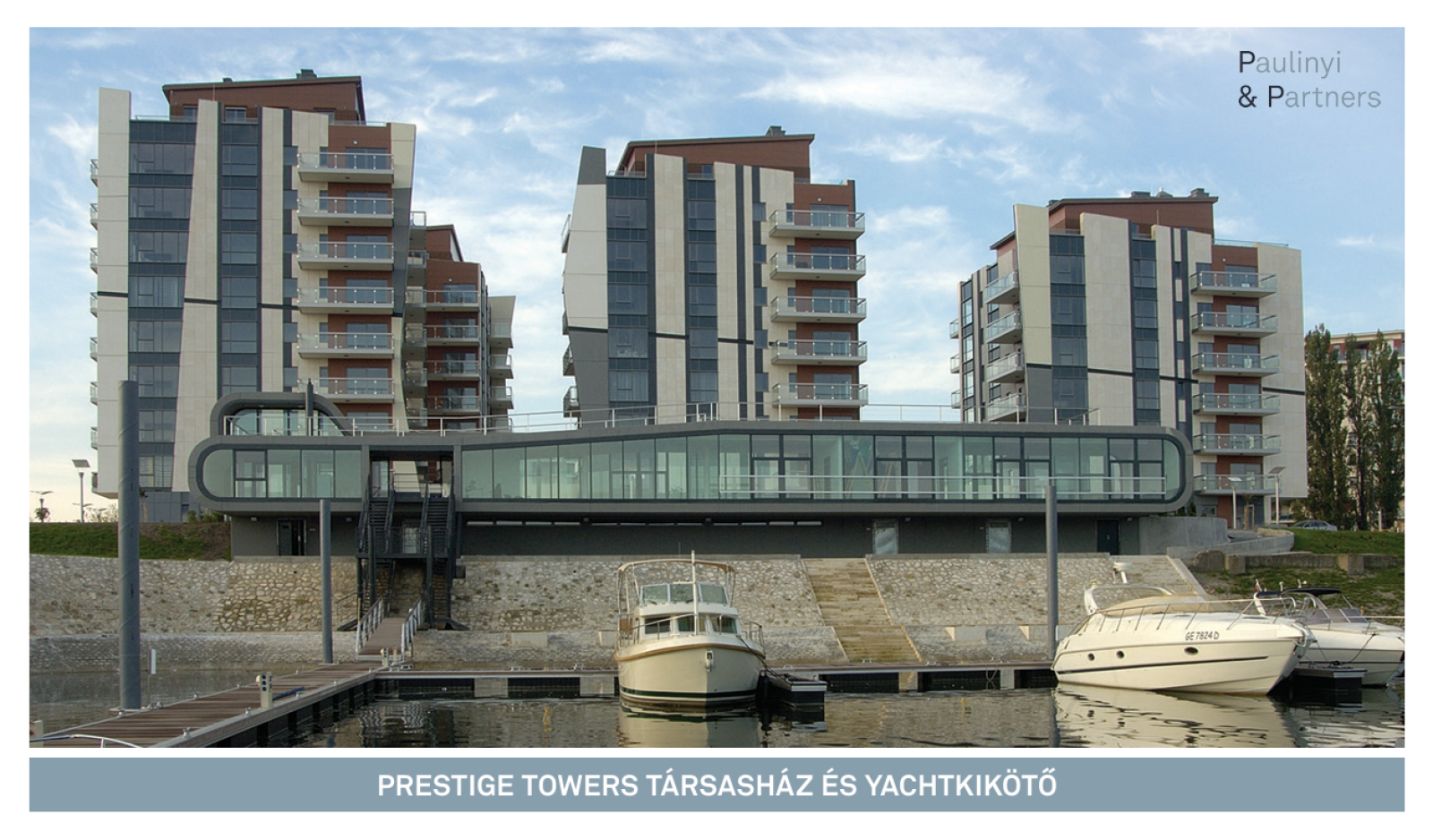
Over the past two decades, Budapest’s Danube waterfront has undergone a profound transformation. The river is no longer merely an urban backdrop; it has become an active, inhabitable space – an asset capable of shaping lifestyle, community, and identity. Completed nearly twenty years ago, Prestige Towers, together with its private yacht marina, was one of the early and defining flagships of this shift, creating what a pioneering residential environment of the era where architecture consciously responded to the presence of the river.
The project is not simply a riverside real estate development; it was among the first architectural manifestos of the Danube’s rediscovery in District XIII, anticipating the broader transformation of the Pest-side waterfront that followed.
The Danube as urban value – beyond scenic presence
Across the globe, waterfronts have gained renewed significance in contemporary urban development. Two decades ago, however, this approach was far from self-evident. In the case of the Danube, the issue is particularly nuanced: the capital’s river is simultaneously a natural resource, a transportation axis, and a powerful cultural symbol.
In the design of Prestige Towers, the river was not treated as a panoramic backdrop but as an organizing principle. The orientation of the building masses, expansive glazed surfaces, generous terraces, and the integration of the marina all serve to embed the presence of water into everyday life.
A significant proportion of the residences enjoy direct visual connections to the Danube, while communal and recreational areas on the lower levels ensure physical access to the waterfront. Here, water is not decorative – it is an integral part of daily experience. While this may seem natural today, at the time of its completion it represented a forward-looking and innovative approach.
An integrated waterfront model: living and recreation
One of the project’s most innovative aspects is the seamless integration of residential function and recreational infrastructure. The yacht marina is not a separate facility but an intrinsic component of the architectural concept: waterborne mobility and waterfront living are directly connected to residents’ daily routines.
Amenities such as wellness facilities, swimming pool, fitness areas, and communal spaces reflected, at the time of development, the standards of international waterfront projects, yet were carefully embedded within the urban fabric of Budapest. This duality defines the project’s character: at once metropolitan and waterfront-oriented, enduring and era-defining.
Redefining District XIII and the Pest Danube waterfront
Over the past twenty years, District XIII has become one of Budapest’s most dynamically evolving urban areas. Alongside the renewal of the Váci Road office corridor, residential and mixed-use developments along the Pest-side Danube have introduced a new level of quality to the city’s structure.
Prestige Towers played a pivotal role in this process. Rather than being understood as an isolated luxury development, it can be seen as an early milestone in a broader urban transformation, contributing to the repositioning of the riverbank as an active and value-generating urban zone.
The history of District XIII demonstrates that waterfront developments are sustainable in the long term only when they integrate with urban infrastructure, strengthen public realm connections, and structure – rather than privatize – riverside spatial use.
Enduring Residential Value in an Urban Context
Prestige Towers redefined waterfront living not as an isolated privilege, but as a consciously designed urban quality from the outset. The Danube here functions as an identity-shaping force, not merely an aesthetic feature.
The District XIII projects of Paulinyi & Partners highlight how contemporary residential architecture – even viewed from a two-decade perspective – can actively shape its urban environment. At Prestige Towers, the integration of water, built form, and recreational infrastructure resulted not only in a place to live, but in a waterfront living model that helped set the direction for the Danube’s subsequent development in the heart of Budapest.